Will we be your only wedding on the day?

Many couples ask early in the process: Will our celebrant have just one ceremony on our wedding day, or multiple?
In short, it varies widely between celebrants, but for the highest level of personalised attention and zero chance of rush, one ceremony per day remains the gold standard—especially in Perth where most civil ceremonies are scheduled in a narrow afternoon window between 3 pm and 5 pm.
The 3–5pm Ceremony Window and Its Impact:
In Western Australia, the majority of non-religious wedding ceremonies take place in the late afternoon for practical and aesthetic reasons:
Daylight photography works best from roughly 3 pm onward (particularly in summer when sunset can be after 7 pm).
Venues often have morning or early-afternoon events booked, pushing ceremonies into the 3–5 pm slot.
Couples want the ceremony finished in time for drinks, canapés, and photos before the sun drops too low.
This creates a very tight window—typically 30–45 minutes for the actual ceremony, plus setup and pack-down time. When a celebrant books multiple ceremonies on the same day, they are almost always squeezing them into consecutive 3–5 pm blocks, with little to no buffer.
Consequences of multiple bookings in this window:
Extremely limited flexibility: A delayed start (late guests, traffic, or weather events) on the first ceremony directly compresses time for the next.
Travel pressure: Moving between Perth metro venues—or worse, from city to coastal or hills locations—within 30–60 minutes leaves almost no margin for error.
Divided mental bandwidth: Even the most organised celebrant must mentally shift gears quickly between couples, reducing the depth of presence and customisation available for each ceremony.
Fatigue risk: Back-to-back emotional highs (vows, ring exchanges, pronouncements) in quick succession can subtly affect delivery, especially later in the day.
Many celebrants manage two ceremonies on busy Fridays and Saturdays by scheduling one at 3 pm and another at 4:30–5 pm with minimal turnaround. While technically doable, (and the very best can pull it off for that very reason) it’s not the ideal for your ceremony.
Why One Ceremony Per Day Makes the Biggest Difference:
Limiting to a single ceremony allows full focus:
Arrive early with plenty of time to set up microphones, test sound, and chat with you and your bridal party.
Stay as long as needed to help direct family photos, or any last-minute adjustments.
Bring complete calm and undivided energy—no mental clock ticking toward the next booking.
This approach is especially valuable in Perth’s outdoor-heavy wedding scene, where weather, venue idiosynchrices, and guest dynamics demand adaptability.
How My Dual Role as Celebrant + DJ/MC Keeps Me to One Ceremony Per Day
Any celebrant seeking to take on the role full-time will usually need to book multiple ceremonies per day on weekends. While many do this and do it well, I still believe nothing beats keeping it to one per day.
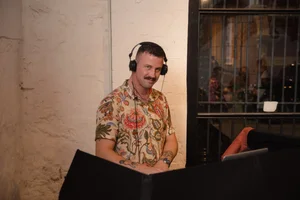
Because I also serve as your wedding DJ and MC for the reception, I also have a built-in structural reason to keep volume low: I physically cannot be in two places at once. The same person who officiates your ceremony stays on-site to handle sound setup, announcements, music cues, and dancefloor energy later that evening. Booking multiple ceremonies in a day would be impossible without compromising one (or both) roles.
As a result, I intentionally take only one ceremony per day. This guarantees:
Seamless continuity from heartfelt vows to high-energy reception.
The same familiar voice and energy carrying through the entire event.
Genuine availability to focus 100% on your story and your guests.
Experience shows that couples notice the difference—particularly when the day flows effortlessly from emotional ceremony to unforgettable party.
Questions to Ask Any Potential Celebrant:
How many ceremonies do you typically book per day or weekend?
What time slots do you use, and how much buffer is there between them?
How do you handle potential overruns in the 3–5 pm window?
Are you able to stay fully present without rushing to another booking?
Clear, confident answers on these points reveal whether quality or quantity is the priority.
If you’re planning a wedding and value an unrushed, fully personalised ceremony with seamless transition to the reception, reach out via the contact page. We’ll discuss your date and vision with no pressure and straightforward answers.